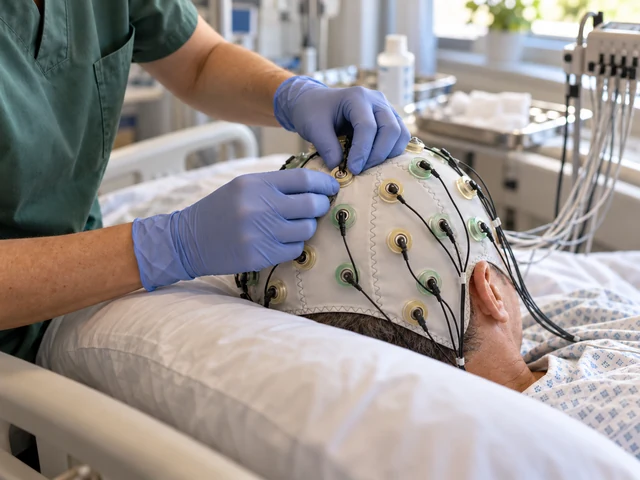
 Setup
Every recording starts with the fit.
Positioning the patient, preparing electrodes and establishing signal quality take time and skilled attention.
Bridging cortex and world
Complex setup. Crowded bedsides. Disconnected workflows. Bringing advanced EEG into clinical care starts with making it practical to use.
Meet Cortibri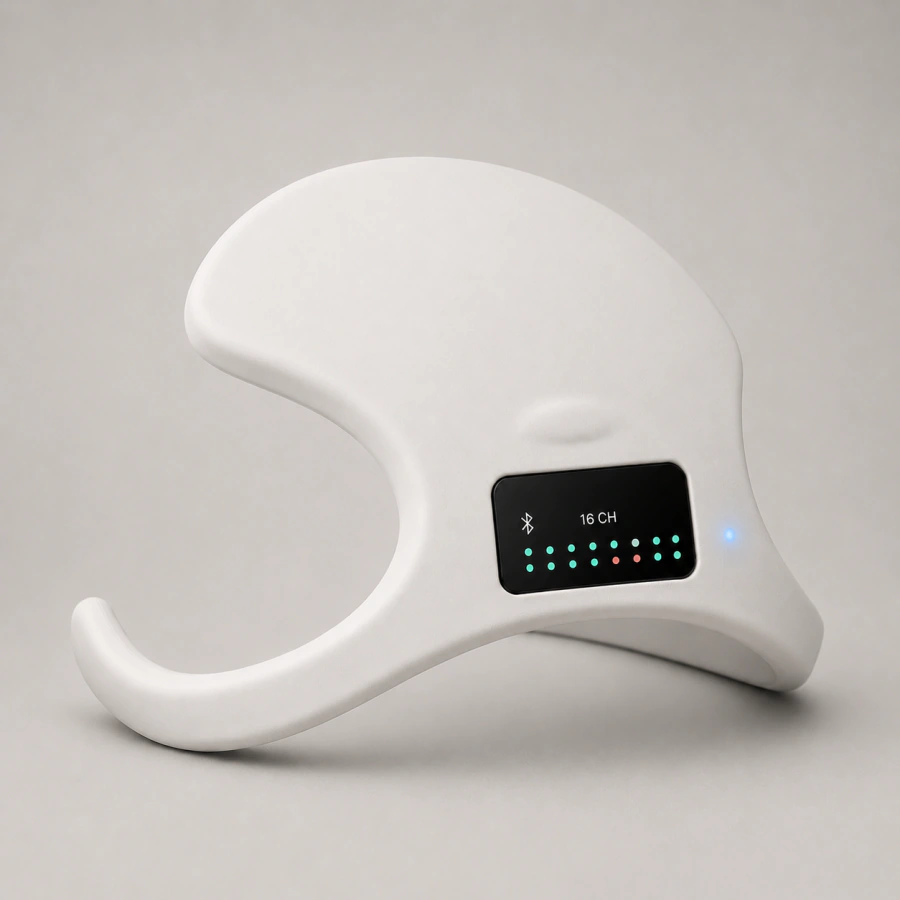
Current clinical issues
In neurointensive care and rehabilitation, the practical demands of equipment, setup and specialist coordination can stand between a clinical question and a useful recording.
SetupPositioning the patient, preparing electrodes and establishing signal quality take time and skilled attention.
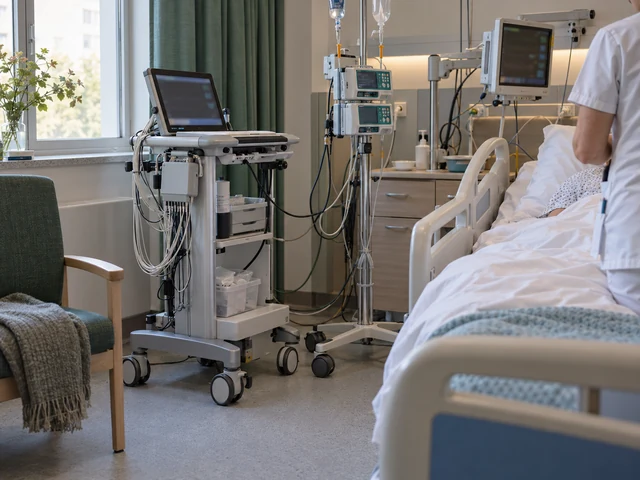 Environment
Monitors, cables and care equipment share a limited bedside. Any new device has to work within that reality.
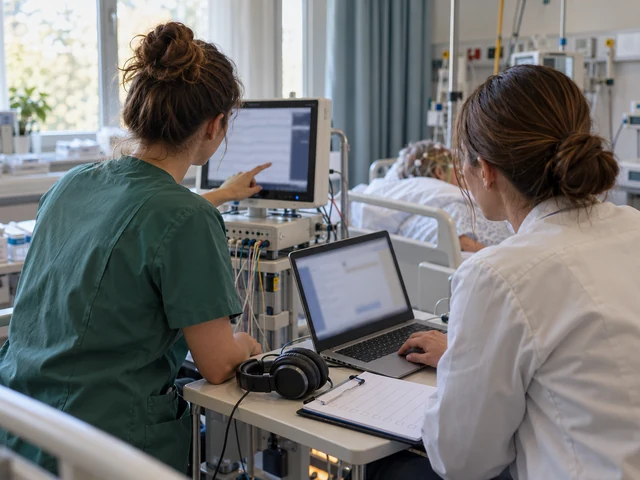 Workflow
Recording, running a task and reviewing the result often involve separate tools and specialist coordination.
The solution
Cortibri brings targeted EEG recording, guided protocols and session review into one compact system. Every stage is designed to work with the next.
Prepare the headset and session around the patient.
PrepareMake recording quality visible before starting the task.
CheckBring task delivery and EEG acquisition into the same workflow.
RecordKeep the recording and its context available for specialist review.
ReviewOne system. A considered path through the whole session.
Intended workflowProduct design
A clinical device has to fit the patient, the care environment and the people using it. These are the starting points for our design.
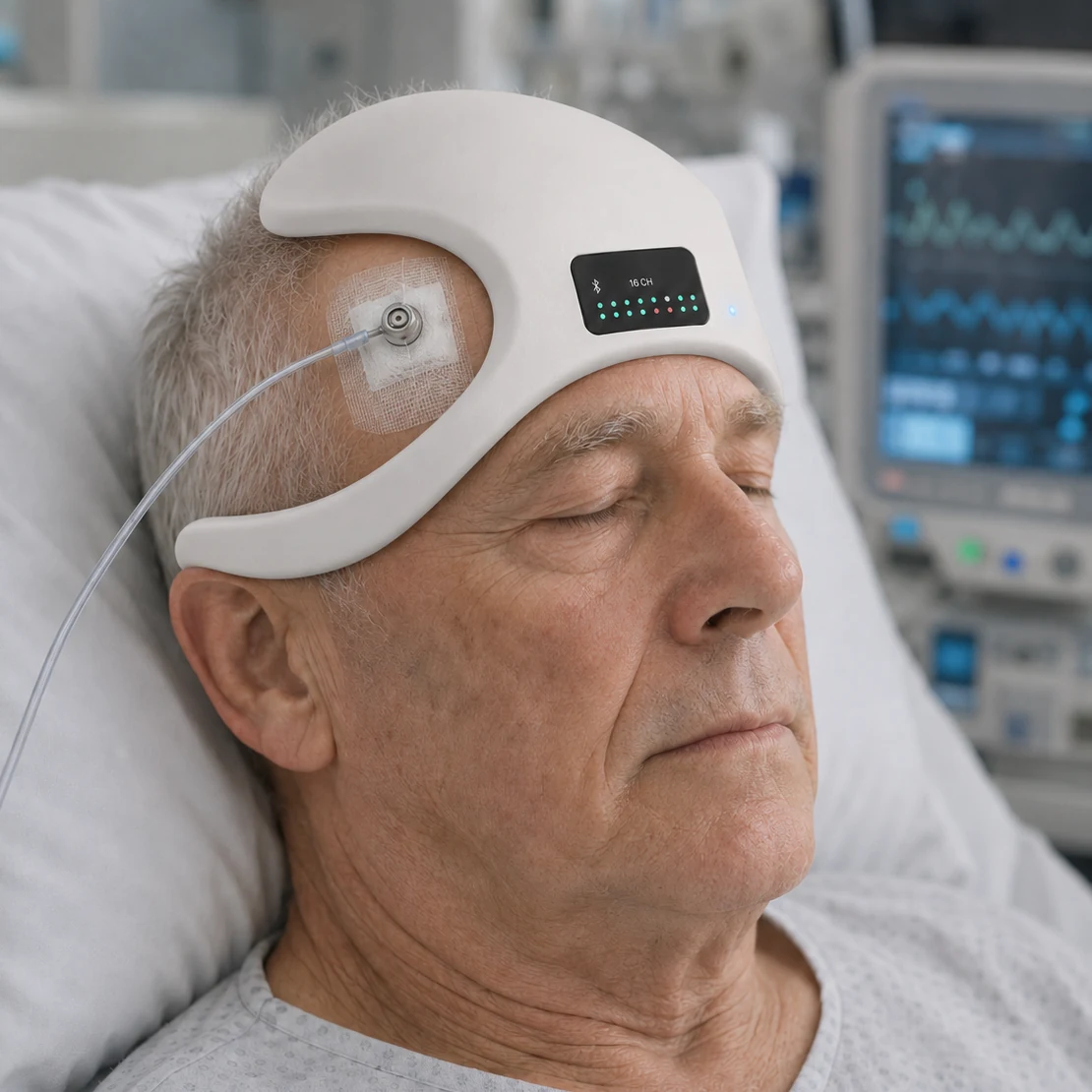
Three design priorities
A compact system designed to reduce equipment burden and fit into a space already shared by people, monitors and essential care.
Bedside positioning and access to the patient inform the physical design. Fit, comfort and compatibility with the care environment are priorities for evaluation.
Clear setup and recording guidance, with detailed session information available for specialist review. The interface should support the work at hand.
Cortibri is in development. Visuals show the intended product; the design will evolve through technical evaluation and clinical input.
Clinical focus
Make EEG-based information more accessible where it could matter. These are our proposed areas for development and validation.
Investigating responses to instructions when a patient cannot reliably respond through movement.
Exploring EEG-based detection of suspicious seizure activity to support timely specialist review.
Investigating brain activity associated with breathing effort during ventilator weaning.
Each application requires dedicated technical and clinical validation. Non-detection of command-following remains inconclusive.
The team
Cortibri began with our BCI bachelor project and a question that followed us into neurointensive care: how do we bring these research methods into the realities of the bedside?
Co-founder
Biomedical engineering, EEG and BCI research. Five years at Novo Nordisk, neuroscience software development and clinical experience from neurointensive care.
Signal processing · Software · Clinical perspective
Co-founder
Biomedical engineering, EEG and BCI research. Practical experience in electronics prototyping, signal processing and computer-aided design.
Electronics · Prototyping · Mechanical designWe are part of the Skylab Startup Programme.
Product roadmap
Our next milestone is an integrated prototype. Clinical input and funding will help us get there; technical evaluation and bedside feedback will guide what follows.
The development path
Initial EEG acquisition, processing and classification work.
Define the needs and workflow with clinicians.
Secure the resources for the next development stage.
Supported by
Bring the hardware and session workflow together.
Assess signal quality, repeatability and task performance.
Evaluate setup and usability with clinical teams.
Investigate the intended use in an appropriately approved study.
Later stages depend on funding, technical results and the appropriate study approvals. Milestones describe the development plan, not validated clinical capabilities.
Let’s build what comes next
